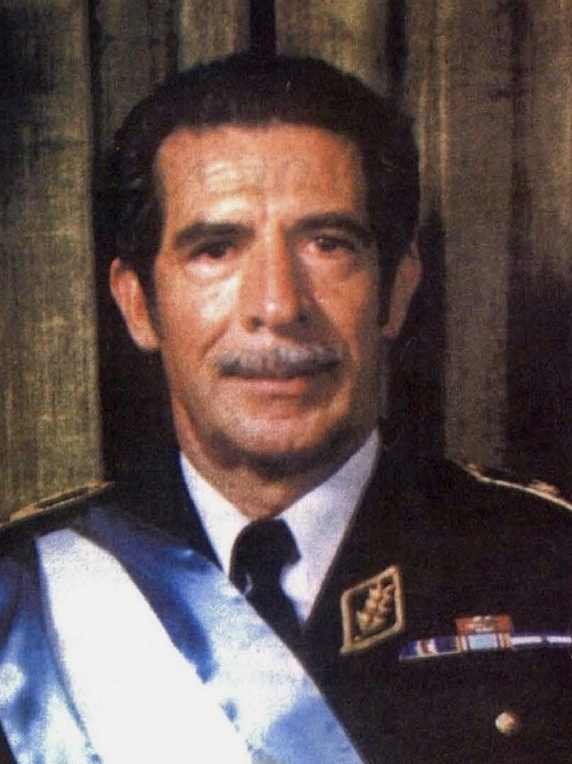
This primary source is a secret intelligence report written by William Knepper and published by the U.S. Department of State’s Bureau of Intelligence and Research on August 4, 1982. The report examines the human rights situation in Guatemala during a period of escalating violence following the March 23, 1982 coup that brought General Efraín Ríos Montt to power. This document was created to inform U.S. officials about political developments, insurgent activity, and patterns of violence occurring throughout Guatemala. The report places particular emphasis on evaluating the leadership of Ríos Montt and presents him as a leader capable of improving the human rights situation. Knepper credits improvements in human rights conditions to Ríos Montt’s leadership and describes actions such as disbanding certain security forces and offering amnesty to insurgents as evidence that violence was decreasing. The document also discusses violence in rural regions, particularly in Indigenous areas, and acknowledges the long-standing tensions between government forces and insurgent groups.
However, the report also shows how much trust U.S. officials placed in Efraín Ríos Montt despite ongoing violence against civilians, especially Indigenous Maya communities. The report was written in August 1982, very early in Ríos Montt’s rule after taking power in March of that year, which makes this level of confidence in his leadership especially notable. Knepper credits improvements in human rights conditions directly to Ríos Montt and presents his actions as proof that violence was decreasing. He supports this claim by referencing data in the appendix that shows the number of reported murders decreased and was lower during the first three months of Ríos Montt’s rule. This is significant because later historical evidence shows that Ríos Montt played a major role in the genocide of the Maya people during his time in power. In 2013, Efraín Ríos Montt was tried and convicted of genocide for his involvement in mass killings of Indigenous communities, although the conviction was later overturned before his death. This makes the report’s confidence in his leadership especially troubling, since it reflects how U.S. officials were willing to present the Guatemalan government as improving even while violence continued. This source is important because it demonstrates that the United States was aware of violence in Guatemala but still chose to trust the leadership that was later linked to genocide. It helps show how U.S. awareness did not lead to meaningful action to prevent the continued killing of Maya communities during what is now widely referred to as the Guatemalan Silent Holocaust.
“A clear understanding of the violence in Guatemala is difficult to obtain due to intimidation of witnesses, guerrilla disinformation, and government control over the media. Nonetheless, two trends in the human rights situation are clear. First, violations by government security forces have decreased substantially over the past four months, particularly in the cities. Second, killings of civilians by the insurgent forces have reached unprecedented levels. …
In the northwestern highland (altiplano) provinces of Huehuetenango and El Quiche the government of Guatemala faces its greatest challenge. There the Guerrilla Army of the Poor (EGP) has spent ten years preaching that the government intends to exterminate the resident Indian people (indigenas), descendants of the Mayas. The guerrillas believe that the Indian is the key to their program for eventual control of the government. (U)
The Indians account for half of Guatemala’s population of seven million. They include twenty cultural groupings which speak twenty different dialects. Few speak Spanish. The Indians have traditionally been ignored by the government when not needed as impressed labor on road building projects, etc. Treatment of the Indians by the non-Indian population of Spanish descent, the ladinos, has been similar, which is not surprising, considering the fact that it is the ladinos who dominate the government. The ladinos have seldom considered the Indians as more than a pool of cheap labor to be exploited at harvest time on the south coast (Pacific) coffee, cotton, and sugar plantations.”
Source:
Knepper, William. “Human Rights in Guatemala.” Intelligence and Research Report. Washington, DC: U.S. Department of State, Bureau of Intelligence and Research, August 4, 1982. https://nsarchive2.gwu.edu/NSAEBB/NSAEBB419/docs/V.11.1982.pdf