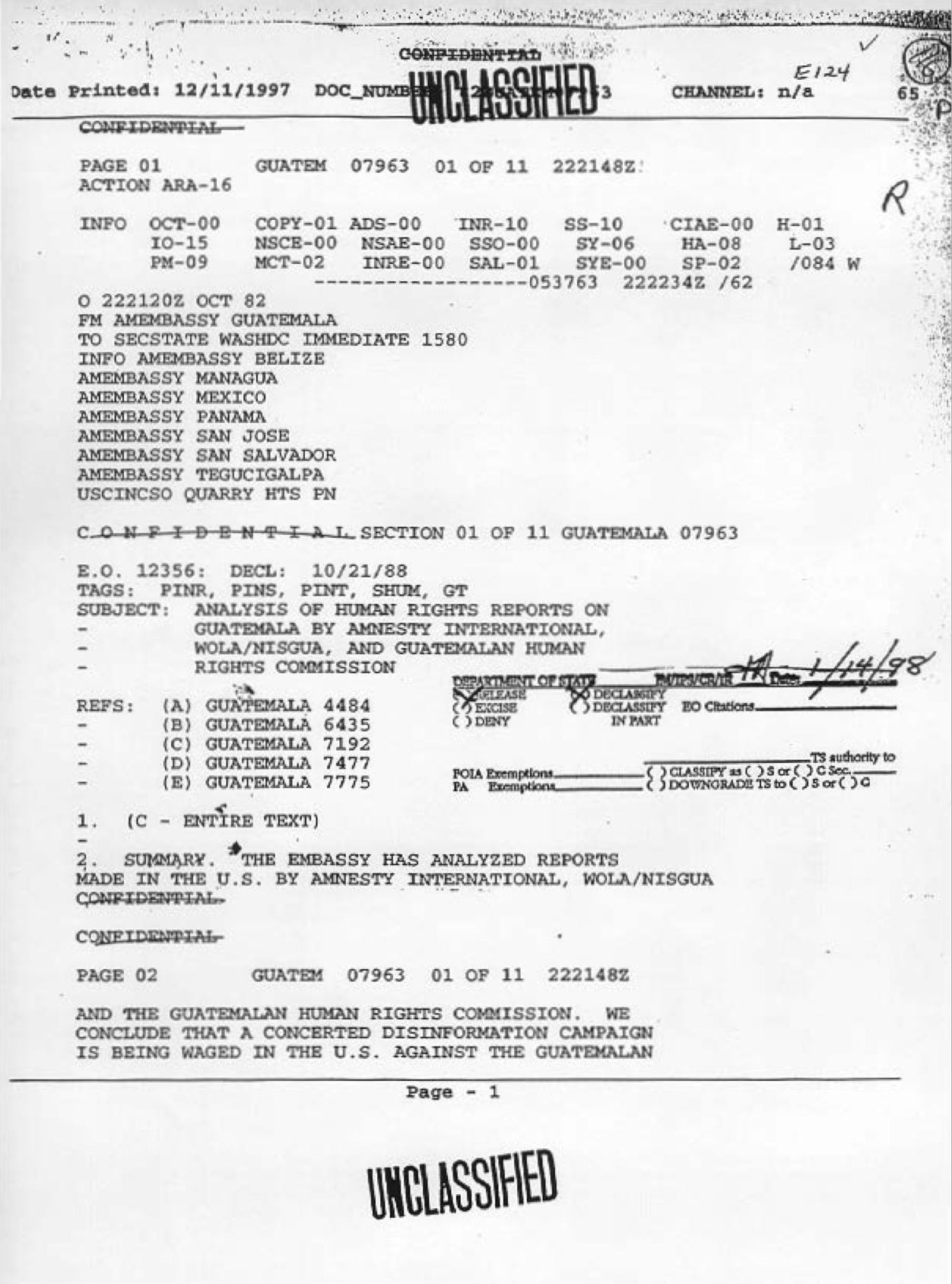
This primary source is a confidential U.S. State Department cable from October 22, 1982 that analyzes reports on human rights conditions in Guatemala produced by organizations such as Amnesty International, WOLA/NISGUA, and the Guatemala Human Rights Commission. The document was created by U.S. embassy officials to evaluate the accuracy of these reports during a period of intense violence in the Guatemalan Civil War, particularly following the rise of military leadership earlier that year. It compares specific incidents reported by human rights organizations with information from newspapers, government sources, and eyewitness accounts, often focusing on alleged massacres and killings of civilians. The cable highlights inconsistencies between sources and repeatedly suggests that some reports may be exaggerated, distorted, or influenced by guerrilla groups.
The perspective of this source reflects the viewpoint of U.S. officials who were skeptical of human rights reporting and cautious about attributing responsibility for violence to the Guatemalan military. While the document acknowledges that violence was occurring, it frequently questions the credibility of reports that blamed government forces, instead suggesting that incidents were misreported or carried out by insurgents. In several cases, the cable concludes that claims made by human rights organizations were “distortions” or even “possible fabrication,” demonstrating a tendency to challenge accounts of atrocities rather than accept them as evidence of state violence. This framing reflects the influence of Cold War politics, during which the United States often prioritized anti-communist alliances and was hesitant to fully recognize or condemn human rights abuses committed by allied governments. This source is historically significant because it shows how official skepticism toward human rights reporting contributed to shaping narratives about violence in Guatemala. It connects to my project by demonstrating how questioning and discrediting reports of atrocities could minimize the experiences of Indigenous victims and contribute to the silencing of communities affected by the genocide.
“THOSE BACKING THE COMMUNIST INSURGENCY ARE BETTING ON AN APPLICATION, OR RATHER MIS-APPLICATION, OF HUMAN RIGHTS POLICY SO AS TO DAMAGE THE GOG AND ASSIST THEMSELVES. IN THE FIGHT TO WIN CENTRAL AMERICA, THE COMMUNISTS KNOW FULL WELL THE IMPORTANCE OF GUATEMALA: THE LARGEST AND MOST ECONOMICALLY POTENT COUNTRY IN CA, STRATEGICALLY LOCATED NEXT TO MEXICO. THE EMBASSY NOTES THAT THE THREE HUMAN RIGHTS GROUPS WHOSE REPORTS ARE ANALYZED IN THIS CABLE, WHATEVER THEIR NOMINAL ALLEGIANCE, USE MANY OF THE SAME INCIDENTS OF ALLEGED ATROCITIES IN THEIR REPORTS (SEE PARA 4) ; NOR DO THE REPORTS EVER CITE ALLEGED GUERRILLA ATROCITIES OR ASSASSINATIONS OF POLICE AND GOVERNMENT OFFICIALS WITH THE EXCEPTION OF FOUR OR FIVE INCIDENTS IN THE AI REPORT (SEE PARAS 4 AND 5). IT SEEMS BEYOND QUESTION THAT THE THREE REPORTS ARE DRAWING ON MANY OF THE SAME SOURCES, SOURCES SPECIFIED IN THE WOLA/NISGUA REPORT — SOURCES MOST OF WHICH ARE WELL-KNOWN COMMUNIST FRONT GROUPS IN CENTRAL AMERICA AND IN THE U.S. (SEE PARA 3). ALTHOUGH EMBASSY BELIEVES IT LIKELY THAT THE GUATEMALAN ARMY HAS INDEED COMMITTED SOME ATROCITIES, THE ASSERTION THAT THEY’ COMMITTED ALL THE MASSACRES ATTRIBUTED TO THEM IS NOT CREDIBLE, ESPECIALLY SINCE ANALYSIS INDICATES THE GUERRILLAS ARE RESPONSIBLE IN MANY CASES.”
Source:
U.S. Department of State. October 22, 1982. “Analysis of Human Rights Reports on Guatemala by Amnesty International, WOLA/NISGUA, and Guatemala Human Rights Commission.” Confidential Cable. Washington, DC: U.S. Department of State. https://nsarchive2.gwu.edu/NSAEBB/NSAEBB11/docs/doc16.pdf