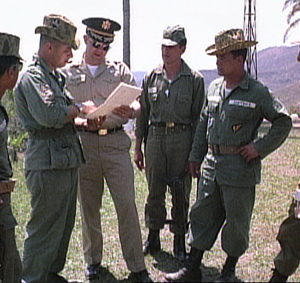
This primary source is a newspaper article written by Mireya Navarro and was published in The New York Times on February 26, 1999. The article reports on the release of findings from Guatemala’s Commission for Historical Clarification (CEH), an independent panel established as part of the United Nations–supervised peace accords that ended Guatemala’s 36-year civil war in 1996. After conducting an 18-month investigation, the commission concluded that the Guatemalan government and its military allies were responsible for widespread human rights violations, including torture, disappearances, and mass killings. The report estimated that more than 200,000 people were killed during the conflict and found that government or paramilitary forces were responsible for more than 90 percent of the documented violations. The article also explains that the commission described the actions of the Guatemalan military as genocide, particularly against Indigenous Maya communities, who were often targeted because the military assumed they supported leftist insurgents. Entire Mayan villages were burned and destroyed, and the report characterized the violence as ruthless and malevolent, resulting in the mass extermination of defenseless populations.
The article also highlights the role of the United States in supporting Guatemalan military forces during the conflict. According to the commission’s findings, American agencies, including the Central Intelligence Agency (CIA), provided training and support to Guatemalan officers and aided counterinsurgency operations despite evidence of widespread human rights abuses. The report concluded that U.S. assistance had a “significant bearing” on violations committed during the war and noted that American officials had knowledge of violent and genocidal campaigns carried out against civilians. Navarro’s reporting captures the public reaction to the release of the report, describing emotional responses from victims’ families who demanded justice and accountability during a ceremony. The article also includes responses from government officials and military leaders who defended their actions as part of efforts to combat Communism, though the actions they took were egregious.
This source is historically significant because it documents one of the first internationally supported investigations to formally identify acts of genocide committed by the Guatemalan government during the Civil War, and to acknowledge the role of foreign support in sustaining military operations (i.e. the United States of America). The publication of the report marked an important step in Guatemala’s transition from armed conflict to peace and reconciliation, as it recommended reparations for victims and the exhumation of bodies from mass graves. The article also reflects the continued struggle for justice following the war, including tensions between victims’ families and government officials who resisted accepting responsibility. As a result, this source provides valuable insight into how the violence against Indigenous Maya communities was publicly recognized and how international investigations revealed the extent of U.S. involvement during what is now widely referred to as the Guatemalan Silent Holocaust.
“The commission listed the American training of the officer corps in counterinsurgency techniques as a key factor that ”had a significant bearing on human rights violations during the armed confrontation.”
Christian Tomuschat, the German jurist who headed the panel, said, ”The United States Government, through its constituent structures, including the Central Intelligence Agency, lent direct and indirect support to illegal state operations.”
That support helped Guatemalan military and paramilitary units engage in kidnapping, torture and executions, a staff member of the commission said. The aide, who spoke on the condition of anonymity, said the panel also found evidence that the United States had knowledge of genocide and still supported the Guatemalan military.
The commission, set up as a part of a United Nations-supervised peace accord that ended the war in 1996, concluded that either the Government or allied paramilitary groups were to blame for more than 90 percent of the 42,000 humans rights violations, 29,000 of which resulted in deaths or disappearances. That attributes a somewhat higher percentage of deaths to the Government and its allies than did a report last year by the Roman Catholic Church.
The commission, which conducted an 18-month investigation, specifically named military intelligence as the organizer of illegal detentions, torture, disappearances and executions, but it stopped short of identifying individuals responsible.”
Source:
Navarro, Mireya. February 26, 1999. “Guatemalan Army Waged ‘Genocide,’ New Report Finds.” The New York Times. https://www.nytimes.com/1999/02/26/world/guatemalan-army-waged-genocide-new-report-finds.html