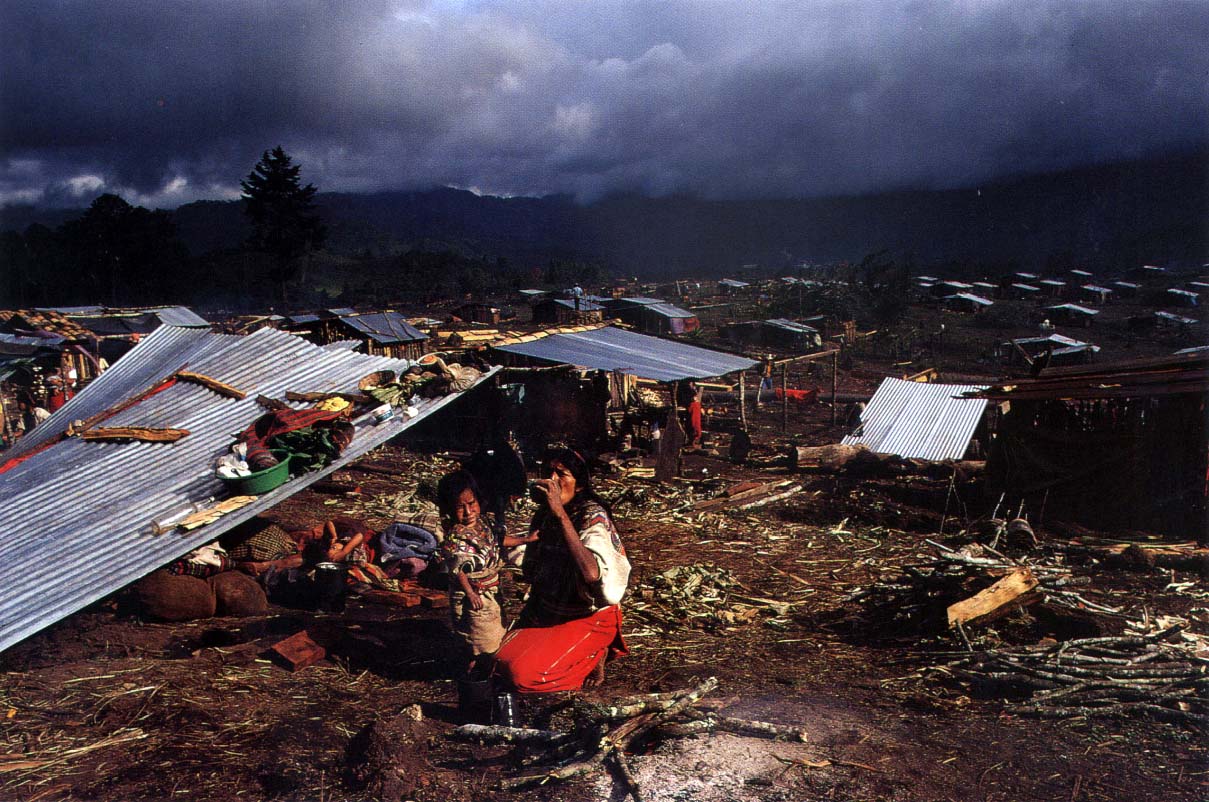
This primary source is a magazine article written by Peter Browning and published in Sojourners Magazine in October 1982. The article examines the escalation of violence in Guatemala following the rise of General Efraín Ríos Montt, who took power in a military coup earlier that year. Browning describes how the Guatemalan army implemented “scorched-earth” tactics in rural areas, particularly in Indigenous regions, where entire villages were attacked, burned, and destroyed along with crops and food supplies. These military strategies were used to eliminate suspected support for guerrilla groups, but they resulted in the mass killing and displacement of Indigenous Maya communities. The article also highlights the scale of the crisis, noting thousands of deaths, widespread fear, and the forced migration of civilians both within Guatemala and across national borders.
The perspective of this source reflects the viewpoint of a journalist and human rights advocate reporting on the violence as it was occurring. Browning presents the actions of the Guatemalan military as systematic and devastating, emphasizing the destruction of entire communities and the targeting of Indigenous populations. Unlike some U.S. government sources that expressed uncertainty or skepticism about the scale of disappearances and deaths, this article more directly attributes violence to military policies and criticizes both the Guatemalan government and U.S. foreign policy for failing to address the root causes of the conflict. This source is historically significant because it provides a contemporary account of the scorched-earth campaigns and demonstrates how the violence was understood and reported by outside observers at the time. It connects to my project by showing how large-scale violence against Indigenous communities was carried out and publicly documented, while also highlighting how these actions contributed to the displacement, destruction, and silencing of Maya populations during what is now widely referred to as the Guatemalan Silent Holocaust.
“Anyone traveling in rural Guatemala can readily see the problem. Hunger, poverty, and illness are a way of life in the highlands. The Indian families no longer have sufficient land to feed their children nor to pass on to their sons’ families, as tradition would have it. This, combined with the daily tortures and disappearances of their people at the hands of the army has caused them to slowly take up the struggle against their government. The decision to oppose the government is an anguishing one for a people who, more than anything else, want to be left in peace to work their small farms in their local communities. It is only in dealing with these problems that the government can hope to turn back the rising tide of violence that has cost 30,000 Guatemalan lives in the past four years.
…
By failing to deal with the underlying social and economic causes of the conflict, favoring instead the military approach of force, Rios Montt is only exacerbating these very problems. Anti-government sentiment is growing in the countryside. Under the army’s scorched-earth campaign, entire villages are being riddled with machine-gun fire and then burned to the ground, along with all crops and stored provisions. Literally thousands of Indians are being massacred.”
Source:
Browning, Peter. October 1982. “Scorched Earth in Guatemala.” Sojourners Magazine. https://sojo.net/magazine/october-1982/scorched-earth-guatemala