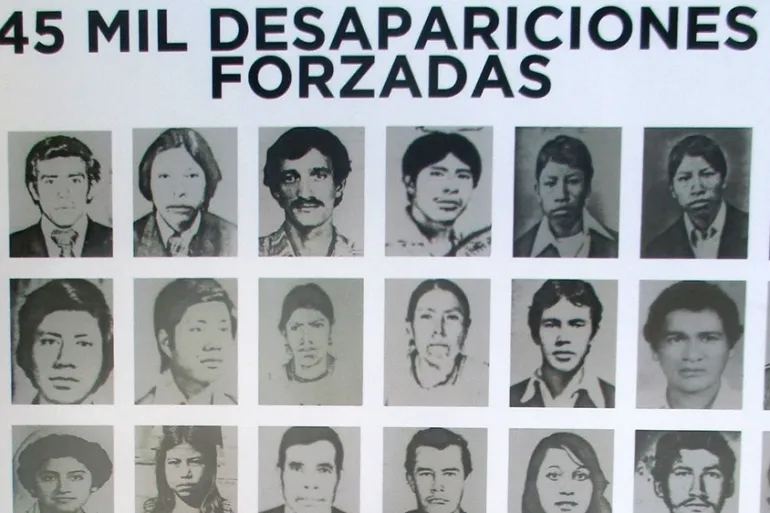
This primary source is a U.S. government intelligence report created in 1986 that analyzes kidnappings and disappearances in Guatemala between 1977 and 1986 during the Guatemalan Civil War. The report describes Guatemala as one of the most violent societies in the Western Hemisphere, where violence was widely used as a political tool. It explains that kidnapping became a common tactic beginning in the 1960s and increased significantly under military governments during the late 1970s and early 1980s, the same period in which the Guatemalan Silent Holocaust occurred. According to the report, victims of kidnappings were often killed and their bodies were rarely found, creating widespread fear and uncertainty across the country. The document was produced by U.S. officials to study political violence and determine responsibility for disappearances, identifying security forces and right-wing paramilitary groups as responsible for most kidnappings. It reports that more than 6,500 people disappeared or were kidnapped after 1977, though human rights organizations estimated numbers as high as 38,000. The report also notes that many victims were Indigenous people and rural farmers, groups that made up a large portion of Guatemala’s population and were especially vulnerable to violence.
The perspective of this source reflects the viewpoint of U.S. intelligence officials, showing both their awareness of widespread violence and their skepticism toward some human rights claims. While the report admits that security forces were likely responsible for many disappearances, it suggests that some reports may have exaggerated the total number of victims. This reflects the influence of the Cold War, when the United States prioritized anti-communist policies over addressing human rights abuses, and often supported governments that claimed to be fighting insurgent groups. The source is historically significant because it shows how governments documented violence while also questioning reports that challenged official narratives. It also highlights how few military or police officials were prosecuted for kidnappings, reinforcing the belief that security forces were above the law. This source connects to my project by demonstrating how disappearances were used as a form of control and intimidation, especially against Indigenous communities, and how U.S. awareness of this violence did not always lead to accountability or protection for victims.
“To our knowledge, no member of the military, police, security forces, or paramilitary groups has ever been prosecuted, convicted, and sentenced for participation in politically-related abductions, although cases of arrest of off-duty security force personnel caught while engaged in free-lance abductions for profit have been reported in the press. At most, military personnel may be disciplined by dismissal from the army. This record gives rise to the pervasive belief in Guatemalan society of a police and military above the law and the arbitrary and capricious use of government power.”
Source:
U.S. Department of State. Guatemala’s Disappeared, 1977–86. March 28, 1986. Washington, DC: U.S. Department of State. https://nsarchive2.gwu.edu/NSAEBB/NSAEBB32/docs/doc30.pdf