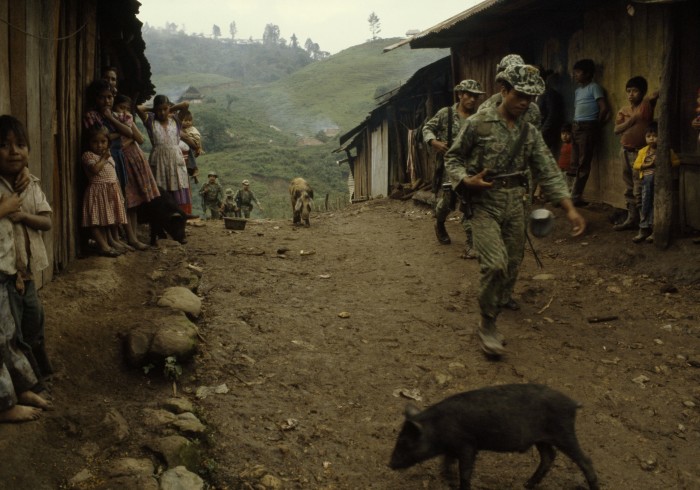
This primary source is a confidential memorandum produced by the U.S. Department of State that examines reports of abductions and political violence in Guatemala during the civil war. The document was created to inform U.S. officials about conflict between the Guatemalan military and insurgent groups, as well as widespread allegations of human rights abuses. It describes military strategies such as the use of “strategic villages,” where rural populations were relocated under army control, and “scorched earth” tactics used in surrounding areas during the early 1980s, a period of intense violence that disproportionately affected Indigenous communities. The memorandum also discusses reports of massacres, rape, and other forms of violence, while noting that thousands of Guatemalans fled to Mexico to escape the fighting.
The perspective of this source reflects the viewpoint of U.S. government officials who were monitoring the situation but showed hesitation in directly attributing responsibility for violence. While the memorandum acknowledges widespread allegations of atrocities committed by government troops, it emphasizes uncertainty, stating that some reports could not be verified or clearly attributed to either the military or insurgent groups, and that there was insufficient evidence to directly link government forces to reported massacres. This demonstrates how U.S. officials documented violence while avoiding definitive conclusions about government responsibility, reflecting broader Cold War policies. This source is historically significant because it shows how official communications could shape the understanding of violence by creating doubt or minimizing accountability. It connects to my project by demonstrating how government-produced documents influenced how disappearances and atrocities were interpreted, contributing to the silencing of victims during what is now widely referred to as the Guatemalan Silent Holocaust.
“The Guatemalan military is making slow progress against insurgent forces amid widespread allegations of atrocities by the troops. Much of the government’s progress can be credited to President Ríos Montt’s arming of the highland Indians, which could boomerang should they turn against the government in the future. The insurgents, faced with growing opposition from traditionally supportive or at least neutral Indian villages, have begun killing those perceived as not supporting their cause.”
Source:
U.S. Department of State. “Guatemala: Abductions and Government Responsibility.” Confidential Memorandum. Washington, DC: U.S. Department of State, n.d. https://nsarchive2.gwu.edu/NSAEBB/NSAEBB11/docs/doc17.pdf